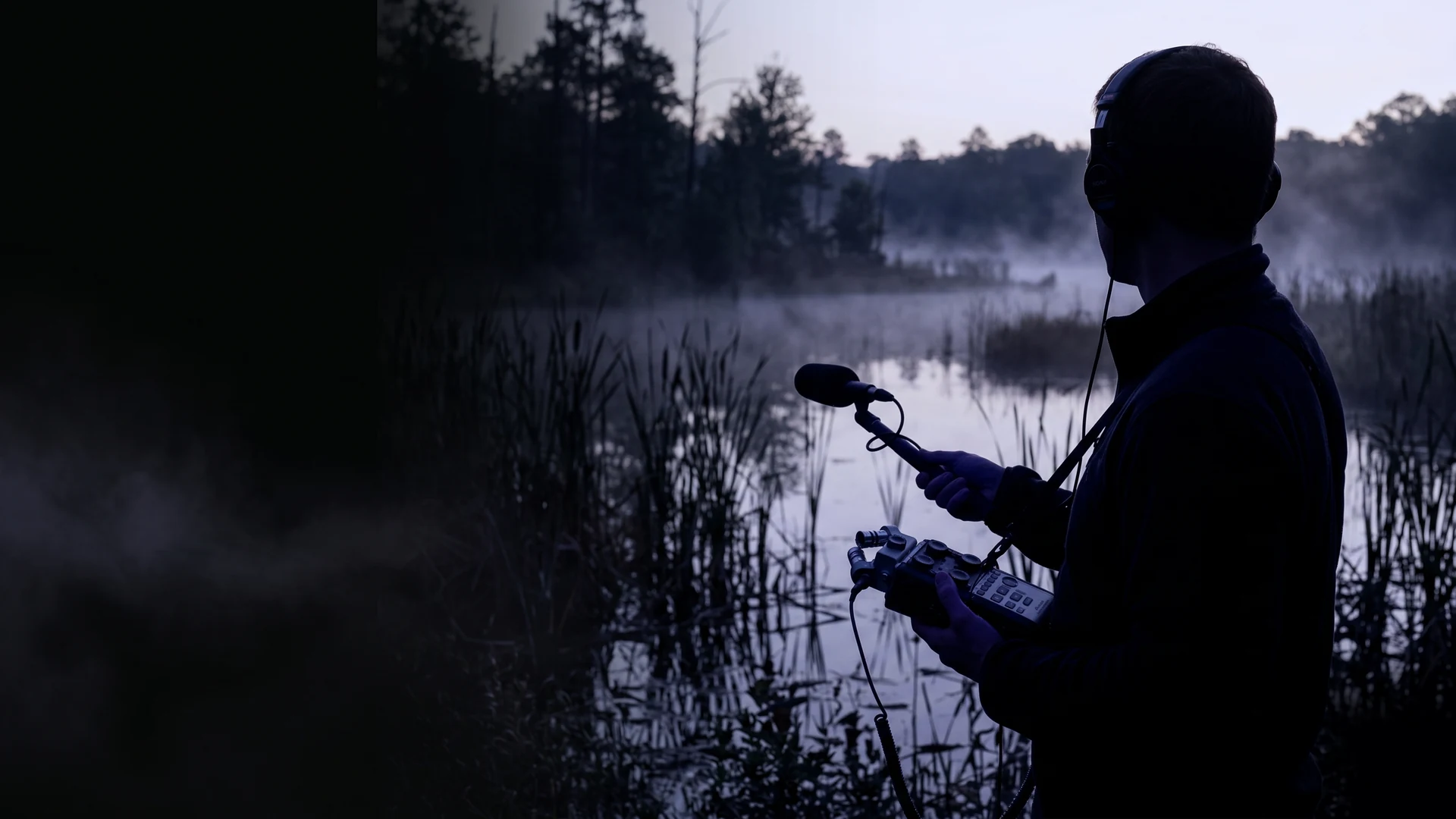
Field bioacoustic recording in a wetland habitat, sensors capturing species sound.
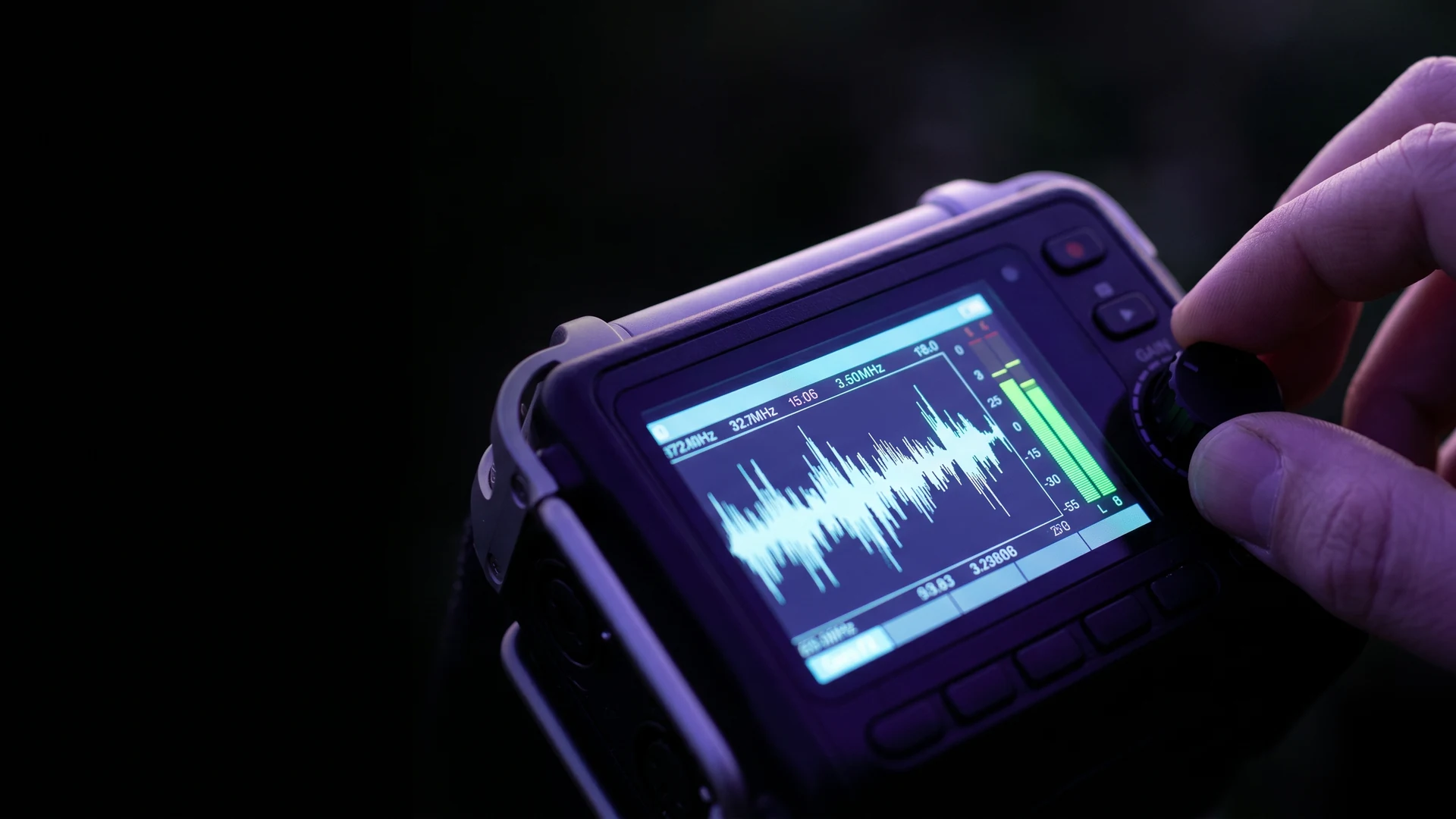
An autonomous recording unit deployed in the field for continuous bioacoustic monitoring.
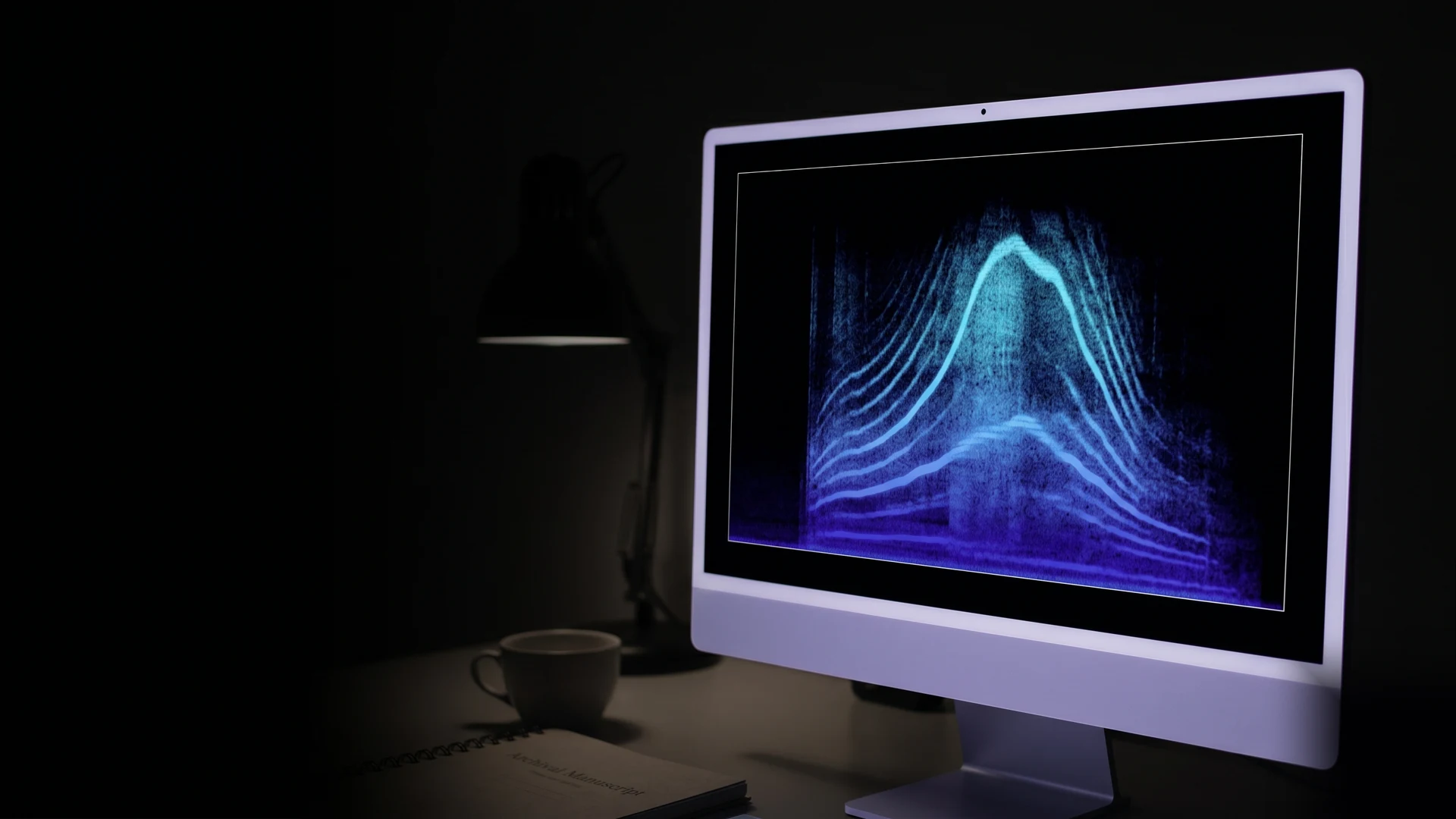
Spectrogram annotation turning raw field audio into a structured, AI-ready dataset.
A species-detection and population-analysis view for continuous biodiversity surveillance.

BIOACOUSTICS · ACOUSTIC INTELLIGENCE

We turn sound into intelligence.

We build machine-learning models that listen. We record biodiversity sound, annotate it, and train systems to detect and infer the patterns human ears miss, the sound that moves below and above what we can hear.
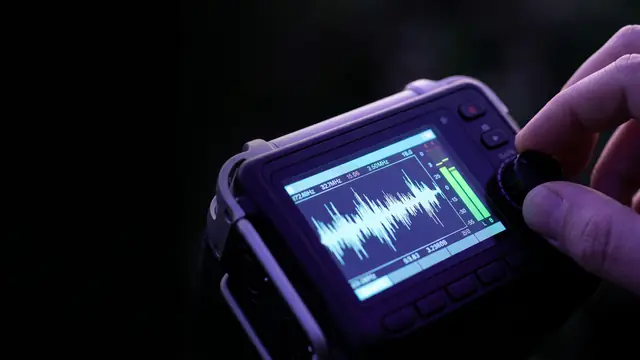
01 / CAPTURE

We record what the habitat is saying.

Active and passive recording systems and Autonomous Recording Units (ARUs) capture species sound continuously, at the sites and frequencies conventional surveys miss.

02 / PROCESS

Then we make the signal legible.

Noise reduction, spectral cleaning, and multimodal annotation turn raw field audio into structured, research-grade datasets, every event timestamped and tagged.

03 / INTELLIGENCE

And turn it into species intelligence.

AI models detect and classify species, predict behaviour, count populations, and raise alerts, biodiversity surveillance that runs around the clock.

What we do

Machine listening, built end to end

Acoustic intelligence is teaching machines to hear. We record sound, annotate it, and train machine-learning models to detect, classify, and infer the patterns inside it.

Most of the acoustic world sits outside human hearing, and outside manual surveys. We build the full pipeline, capture, processing, annotation, and model training, so sound becomes data, and data becomes a system that can listen on its own.

The unheard spectrum

What conventional monitoring can’t hear

0.04%

Your ears hear 0.04% of the animal kingdom. The rest moves below and above human hearing, and that is where we listen.

Between 17 and 20 Hz, elephants are speaking.

Between 120 and 200 kHz, bats are hunting.

The audible sliver of the acoustic spectrumOn a logarithmic scale from 1 Hz to 200 kHz, human hearing spans 20 Hz to 20 kHz. Below it lies infrasound, where elephants communicate at 17–20 Hz; above it lies ultrasound, where bats hunt at 120–200 kHz. Cymasonic Labs monitors the full spectrum, including the infrasound and ultrasound bands humans cannot hear.1 Hz101001k10k100k200kINFRASOUNDwe monitorWHAT YOU HEAR20 Hz – 20 kHzULTRASOUNDwe monitorELEPHANTS17–20 HzBATS120–200 kHz

Source: Fay, Hearing in Vertebrates, 1988 · Sinauer Associates

What we offer

Record. Annotate. Train.

Three ways to work with the lab on acoustic intelligence, whether you want to capture sound, label it, or build the models that learn from it.

01

Record

We teach field recording, and we train local recordists across regions to capture sound where flying a team in is not practical. You record from your place; the dataset grows.

02

Annotate

We turn raw field audio into labelled, model-ready data: spectrogram tagging, behaviour-linked annotation, and quality control, done to research standards.

03

Train models

We build and train acoustic-intelligence models that detect and classify species from sound, the brains that turn a sound archive into a system that can listen on its own.

We build capacity on the ground: we train recordists locally so remote and hard-to-reach sites can be captured by the people already there, rather than waiting on a visiting team.

How it works

The acoustic-intelligence workflow

Four stages, one continuous pipeline, from capture in the field to species-level intelligence.

STAGE 02

Audio Processing

  • Noise reduction and signal enhancement
  • Spectral cleaning
  • Dataset normalization
  • Environmental filtering
STAGE 03

Annotation Pipeline

  • Audio and spectrogram annotation
  • Multimodal, behaviour-linked annotation
  • Timestamp synchronization
  • Sensor event correlation
STAGE 04

AI & ML Pipeline

  • Species detection and classification
  • Behaviour prediction models
  • Population counting
  • Alert generation and activity analysis
STAGE 01

Data Acquisition

  • Active and passive recording systems
  • Autonomous Recording Units (ARUs)
  • Sensor-integrated infrastructure
  • Species-specific microphone selection
STAGE 02

Audio Processing

  • Noise reduction and signal enhancement
  • Spectral cleaning
  • Dataset normalization
  • Environmental filtering
STAGE 03

Annotation Pipeline

  • Audio and spectrogram annotation
  • Multimodal, behaviour-linked annotation
  • Timestamp synchronization
  • Sensor event correlation
STAGE 04

AI & ML Pipeline

  • Species detection and classification
  • Behaviour prediction models
  • Population counting
  • Alert generation and activity analysis
STAGE 01

Data Acquisition

  • Active and passive recording systems
  • Autonomous Recording Units (ARUs)
  • Sensor-integrated infrastructure
  • Species-specific microphone selection

The same four stages, seen as one funnel, each step concentrates raw field audio into something a model can act on.

The bioacoustic-intelligence pipelineA four-stage funnel that narrows from raw field recordings, through audio processing and annotation, to trained species models, noise becomes signal becomes species-level intelligence.01ACQUIREraw field recordings02PROCESScleaned signal03ANNOTATEtagged events04AI / MLspecies models

The work behind the models

Where this goes

The intelligence we build supports conservation and biodiversity work, including collaboration with Antz Systems. These are the kinds of applications and deliverables that come out of it.

Where it is used

Applications

  • 01Biodiversity surveys
  • 02Rewilding programs
  • 03Wildlife sanctuaries
  • 04Zoos
  • 05Conservation projects
  • 06Research institutions
  • 07Long-term ecological monitoring

What you receive

Deliverables

  • 01Acoustic monitoring systems
  • 02Behavioural analytics dashboards
  • 03Alert systems
  • 04Species databases
  • 05Annotated, AI-ready datasets
  • 06Reporting systems

Who it is for

Conservation organizationsZoos & sanctuariesResearch institutionsRewilding & biodiversity programs

Research infrastructure

Species Sound Database

We build structured, large-scale species sound databases for AI training, research, conservation, and sound design, with categorized recordings, behaviour-tagged datasets, environmental and geographic metadata, spectrogram indexing, and AI-ready formatting.

65 Hz · C2, the bioacoustics resonance

Record, annotate, or train with the lab

Whether you want to learn field recording, annotate datasets, or build acoustic-intelligence models with us, tell us where you are and what you want to capture.

Other divisions